

Good morning! We’ve had a ton of questions about ‘rucking’ – so, let’s go!
A quick show of hands, how many of you walk regularly?
I knew it. Sweet!
Second question… how many of you have ever carried something while walking? A backpack, groceries, or a child who “can’t walk another step”?
Of course you have, and there you go. You’ve done it. You’ve already been introduced to one of the simplest, most effective variations out there: rucking.
What is Rucking?
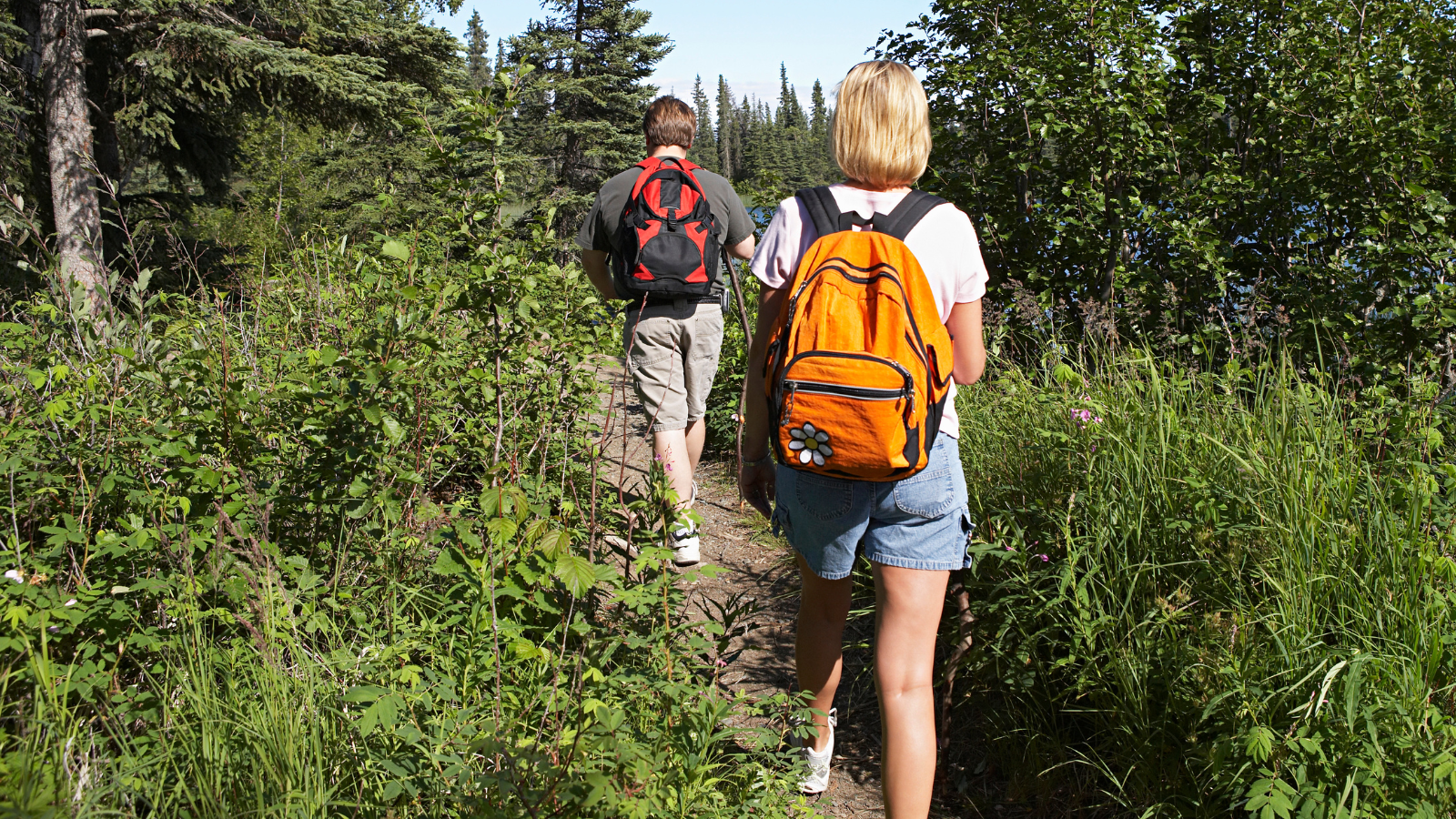
Rucking is just walking with weight on your back. That’s it. No complicated routines. No expensive memberships. No intimidation factor.
It’s been used for decades by the military, but in recent years, it’s found its way into everyday fitness, and for good reason. They even make for great parody videos.
Why It Works (And Why I Like It So Much)
From a cardiovascular standpoint, rucking quietly checks a lot of boxes:
- Increases intensity without increasing impact
- You get your heart rate up without pounding your joints. That’s a big win for long-term health.
- Builds strength and endurance simultaneously
- You’re not just walking. You’re engaging your core, back, glutes, and shoulders.
- Burns extra calories
- Same route, same time. Just a different kind of challenge, if you’re up for it.
- Improves posture
- Improves balance
- Done correctly, it actually encourages you to stand taller and move better.
- Highly scalable
- You can make it as easy or as challenging as you’d like.
Let’s pause for a second because this part matters: walking on its own is one of the best things you can do for your health. It’s a health miracle. Full stop.
Rucking isn’t a replacement. It’s just an option if and when you want a little variety.
How to Start (Without Overthinking It)
If you’re thinking, “This sounds great, but where do I begin?” I’m coming to you on this gorgeous FRIDAY morning with some good news. This is about as low-barrier as it gets.
- Grab a backpack
- Add 10–20 pounds (books, water bottles, anything stable, one of my newsletters (get it? They’re long. Oh, I get it, David))
- Put it on snug and high on your back
- Go for a walk
That’s your starting point.
A few quick tips:
- Ask your health care provider if rucking is something you should try
- Start light. There is no prize for overdoing it on day one.
- Keep your posture tall (think “proud chest, eyes forward”).
- If something hurts in a sharp or unusual way, I’d back off.
A Few Ideas to Keep Things Fresh
One thing I’ve learned over the years: consistency beats intensity, but a little variety helps keep things interesting (and keeps us coming back).
Here are a few simple ways to mix things up:
1. The “Conversation Carry”
Walk with a friend and bring a light pack. If you can still hold a conversation, you’re in a great zone for cardiovascular health.
2. The “Errand Upgrade”
Turn everyday tasks into opportunities:
Grocery store? Carry your bags.
Kid’s practice? Walk the field with a pack.
Movement doesn’t have to be separate from life.
3. The “Hill Day”
Find a small incline and walk it a few times with your pack. Short, effective, and surprisingly powerful. When you start looking like Schwarzenegger, take 5 lbs out, you’ve gone too far.
4. The “Time-Crunched 20”
Short on time?
20 minutes + a little weight = meaningful work.
A Quick Word of Caution
Rucking is safe for most people, but like anything:
- If you have back, neck, or joint issues, start very light
- If you’re unsure, check in with your physician
The goal here isn’t to prove anything. It’s to build something sustainable.
Why This Matters
Over the years, we’ve seen and heard stories about exercise in terms of extremes. Marathons, high-intensity workouts, dramatic transformations.
But health is built much more quietly than that.
It’s built in small decisions:
- Taking the walk
- Adding a little challenge (if you feel ready)
- Showing up again tomorrow
Rucking is one of those small options that can make a meaningful difference over time.
And perhaps most importantly, it’s something you can do almost anywhere, with almost anyone.
Whether you add weight or not, if you’re getting out there and walking, you’re doing something really important for your health. This is just one more way to keep it interesting if you feel like it.
If you try it this week, please let me know how it goes.
Peace and Love,
David
David Sabgir, MD, FACC
Cardiologist and Founder/CEO of Walk with a Doc

About Walk with a Doc:
As an international non-profit organization, Walk with a Doc is committed to inspiring communities through movement and conversation with walking groups led by local doctors, healthcare providers, or medical students.
Started in 2005 by Dr. David Sabgir, a cardiologist in Columbus, Ohio, the program now extends to hundreds of communities throughout the world. The walks are a fun, free, and safe place to get physical activity, learn tips for healthy living, and meet new people.
Learn more at www.walkwithadoc.org