

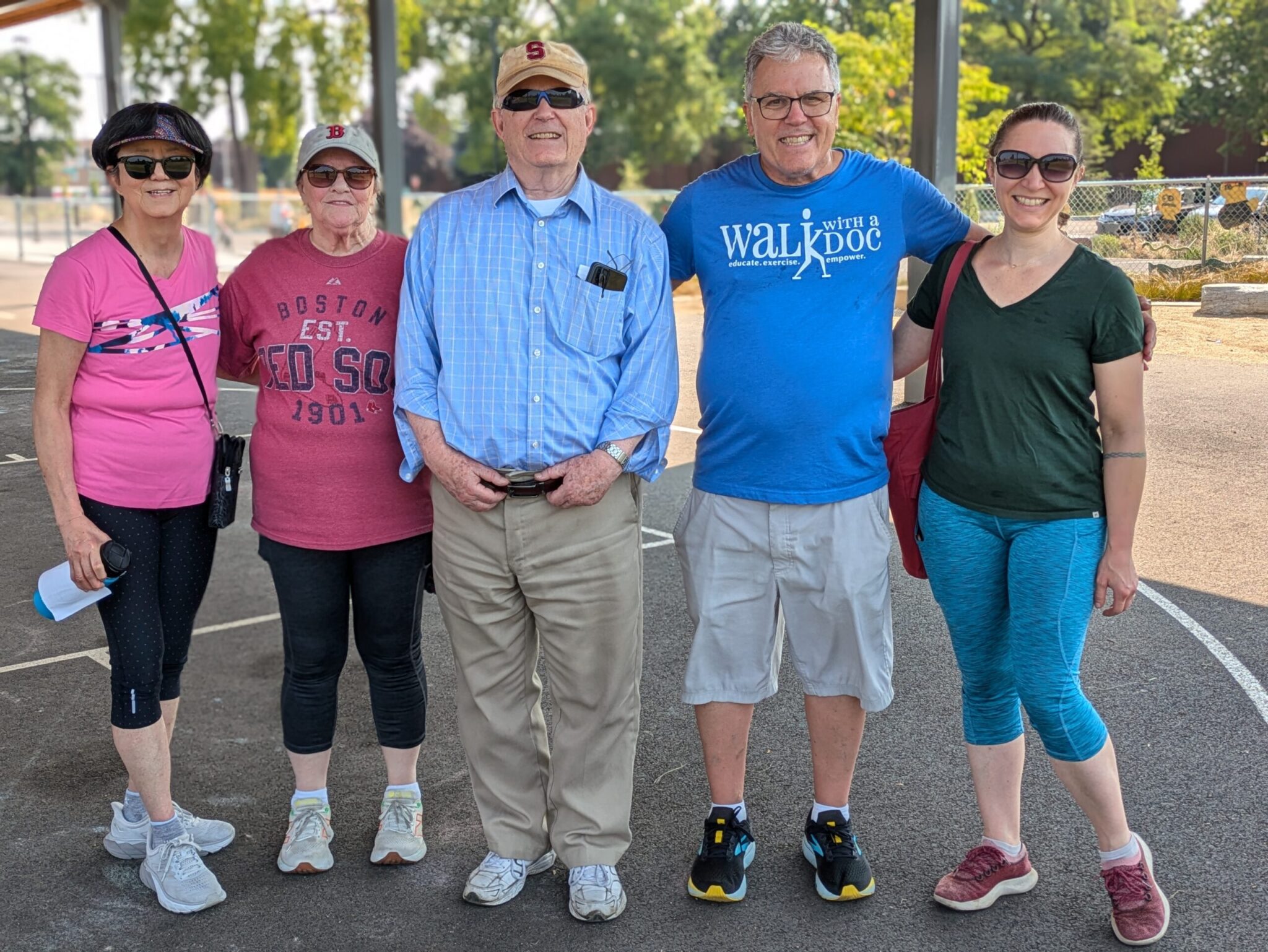
When Dr. Dave Griffin talks about walking, he isn’t talking about exercise alone. He’s talking about conversations on park benches. Laughter between participants. Taking breaks without embarrassment. And helping people rediscover confidence in their bodies—one step at a time.
As a podiatrist in Vancouver, Washington, Dr. Griffin has spent years caring for patients with diabetes, foot wounds, and peripheral artery disease (PAD). In the clinic, he often encourages patients to walk. But like many healthcare providers, he recognized that knowing what to do and actually doing it are two very different things.
Then another podiatrist introduced him to Walk with a Doc. “I realized it’s like the best-kept secret out there for keeping people moving,” Dr. Griffin said. “But even more importantly, it gets people talking. That conversation is probably just as valuable for our mental health as the physical health we get from walking.”
Today, Dr. Griffin leads his own Walk with a Doc chapter, where participants gather not only to exercise, but to build friendships, learn from one another, and create a welcoming community where every pace is celebrated.
Creating a Walk That Works for Everyone
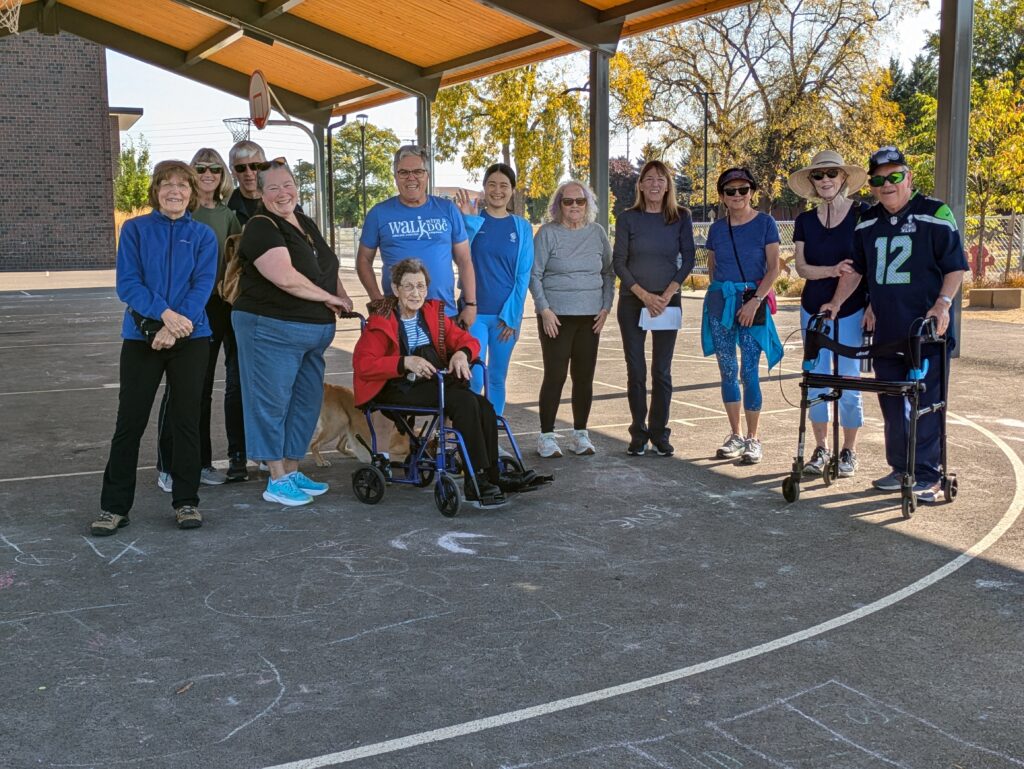
Every Walk with a Doc chapter is unique, but Dr. Griffin intentionally chose a walking location with wide paths and plenty of benches. Why? Because not everyone can walk continuously. His group welcomes everyone—from seasoned walkers to participants using wheelchairs, walkers, or strollers. Music often plays in the background, conversations naturally form, and participants are encouraged to listen to their bodies rather than compare themselves to anyone else.
“There is no keeping up,” he said. “Just do what you do.” If someone needs to stop and rest, they stop. If they need to walk slower, they walk slower. And if they spend part of the walk sitting on a bench enjoying the scenery, that’s perfectly okay. That philosophy has made his chapter especially meaningful for people living with Peripheral Artery Disease.
Why Walking Matters for PAD
Peripheral Artery Disease (PAD) affects millions of Americans and occurs when narrowed arteries reduce blood flow to the legs. One of its hallmark symptoms is intermittent claudication—pain or cramping in the calves that develops while walking because muscles aren’t receiving enough oxygen. Ironically, one of the most effective treatments is also one of the most challenging.
Walking.
Dr. Griffin explains that continuing to walk, even through manageable discomfort under medical guidance, helps stimulate the development of new blood vessels and improves circulation over time. “If you don’t walk and your circulation continues to worsen, you may lose your leg,” he explained. “If you lose your leg, your life expectancy goes down significantly. This isn’t simply a choice to walk or not walk. For many people, it’s truly a matter of life and limb.” Yet many people with PAD walk alone. They complete their daily exercise because they know they should, but often without encouragement, companionship, or community. That’s where Walk with a Doc fills an important gap.
A Place Where It’s Okay to Pause
For someone living with PAD, joining a walking group can feel intimidating. What if everyone walks faster What if they have to stop every few minutes? What if people think they’re falling behind? Dr. Griffin wants participants to know they don’t need to worry. “There is no race,” he said. “Nobody’s going to judge you.” Instead, he encourages participants to communicate with their walk leader before attending. A simple email explaining that they may need extra breaks can help everyone feel more comfortable.
Most importantly, he reminds participants that stopping to rest isn’t failing. It’s part of the treatment. “I’ve had PAD patients join us, and sometimes they feel embarrassed that they have to sit down,” he shared. “I always tell them not to feel embarrassed. Take your break. That’s not a problem.” That welcoming environment allows participants to focus less on keeping pace and more on building healthy habits they can sustain.
Community Is Medicine
While Dr. Griffin frequently speaks about foot health and circulation, he believes one of the greatest benefits of Walk with a Doc can’t be measured by a fitness tracker. It’s connection. Many participants come for the walking but stay because of the people. “We’re social beings,” he said. “Being isolated doesn’t give us that sense of purpose.”
Whether participants spend the walk discussing gardening, grandchildren, vacations, or simply getting to know someone new, those conversations create something powerful: accountability, belonging, and friendship. For individuals managing chronic diseases like PAD, that support can become just as important as the exercise itself. “I think Walk with a Doc fits perfectly into that social team,” Dr. Griffin said.
Starting with the Right Foundation
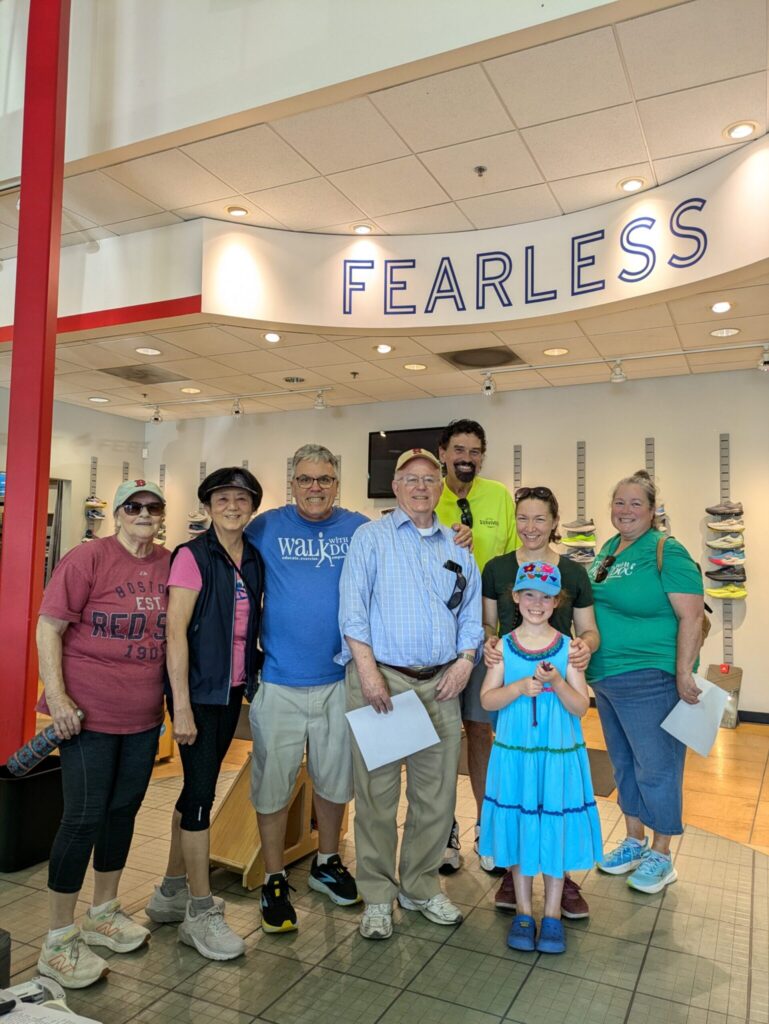
As a podiatrist, Dr. Griffin also emphasizes the importance of proper footwear. Rather than recommending a single shoe brand, he encourages walkers to visit a specialty running store where trained staff can properly measure both the length and width of their feet and help them find shoes that fit comfortably.
“There is no breaking in shoes,” he explained. “If they don’t feel good, they don’t feel good.” As we age, our feet naturally become longer and wider, making proper shoe fit increasingly important. He also reminds walkers to replace worn-out shoes regularly and to work closely with their podiatrist if they have diabetes, neuropathy, or PAD. Combined with gentle stretching, proper footwear helps participants stay comfortable and continue doing what matters most—walking consistently.
Bringing More People Into the Fold
Dr. Griffin hopes more healthcare providers discover Walk with a Doc the same way he did: through another colleague. Since launching his chapter, he has shared Walk with a Doc at podiatry meetings, conferences, and professional organizations, encouraging other providers to experience what happens when healthcare extends beyond the exam room.
Dr. Griffin helped bring together a new partnership between Walk with a Doc, The Foundation to Advance Vascular Cures, and the Worldwide Facebook Group; Peripheral Artery Disease, Walking, Exercise and Wellness Support. This new partnership has a new mutual goal of bringing the vascular community—particularly patients with Peripheral Artery Disease, their vascular surgeons and other members of the vascular community, like Dr. Griffin—together, with new chapters being formed worldwide and new Peripheral Artery Disease information being made available through the Foundation.
His advice for both physicians and participants is remarkably simple. “Share, share, share.” Share it with colleagues. Share it with patients. Share it with family and friends. And if you’re living with Peripheral Artery Disease, don’t let the fear of walking slower keep you from joining.
As Dr. Griffin reminds participants, “Find your groove. Find your lane. Don’t be afraid to come out and be part of a larger group.” Sometimes the most important step isn’t walking farther. It’s simply showing up. And at Walk with a Doc, there’s always a place—and a pace—for everyone.
About Walk with a Doc
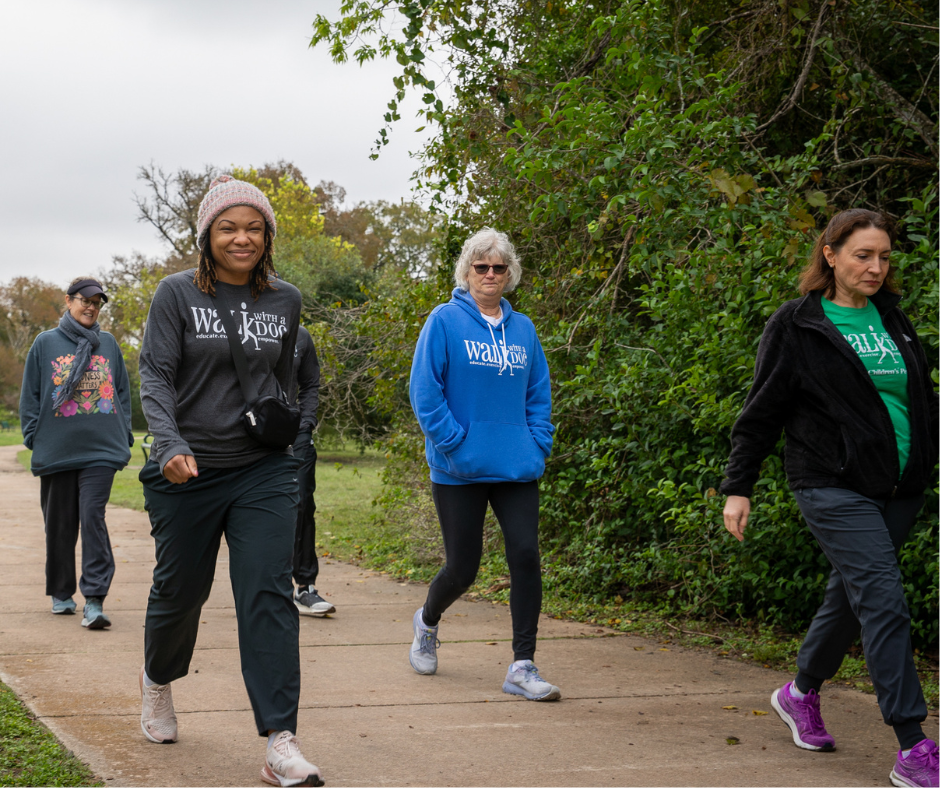
Walk with a Doc is a nonprofit that was started in 2005 by Dr. David Sabgir, a cardiologist in Columbus, Ohio. Initially aimed at helping patients get more physical activity, the benefits of the program go far beyond a simple walk! The opportunity to build friendships within the community, spend time in nature, and receive free health education in a relaxed setting is an all-in-one “prescription” for better health.

JOIN A WALK
Take a step toward better health and join one of our free local walking programs.

START A CHAPTER
We make it easy for healthcare providers to launch a walking program in their community.

DONATE
Support the movement by making a tax-deductible gift and help get more people walking.