
Good morning!
I’ve been reading Slow Productivity by Cal Newport, and it’s been making me think.
His basic premise is simple: in a world obsessed with doing more, faster, maybe the better path is to do fewer things… more deliberately.
Not lazily. Not passively.
Slowly.
Cal talks about the broader “slow” movement.
There’s slow food, a pushback against fast food, encouraging us to savor meals, honor ingredients, and enjoy the process of cooking and eating.
There’s slow travel, where the goal isn’t to check off 12 countries in 10 days, but to truly experience one place deeply.
There’s slow fashion, emphasizing quality over quantity.
Even slow parenting has become a movement. That’s letting kids grow without every second being scheduled and optimized.
Apparently, almost everything has a “slow” version now.
And it got me wondering: What would slow medicine look like?
I think, in many ways, Walk with a Doc already is it.
Think about traditional medicine today.
It can feel rushed.
Seven-minute visits.
Inbox overload.
Electronic medical records.
More clicking than listening.
More metrics than meaning.
As physicians, we fight the current where we are encouraged to move from room to room like air traffic controllers.
As patients, it can feel transactional:
“My blood pressure is up.”
“My cholesterol is down.”
“See you in six months.”
Important? Absolutely.
Enough? Probably not.
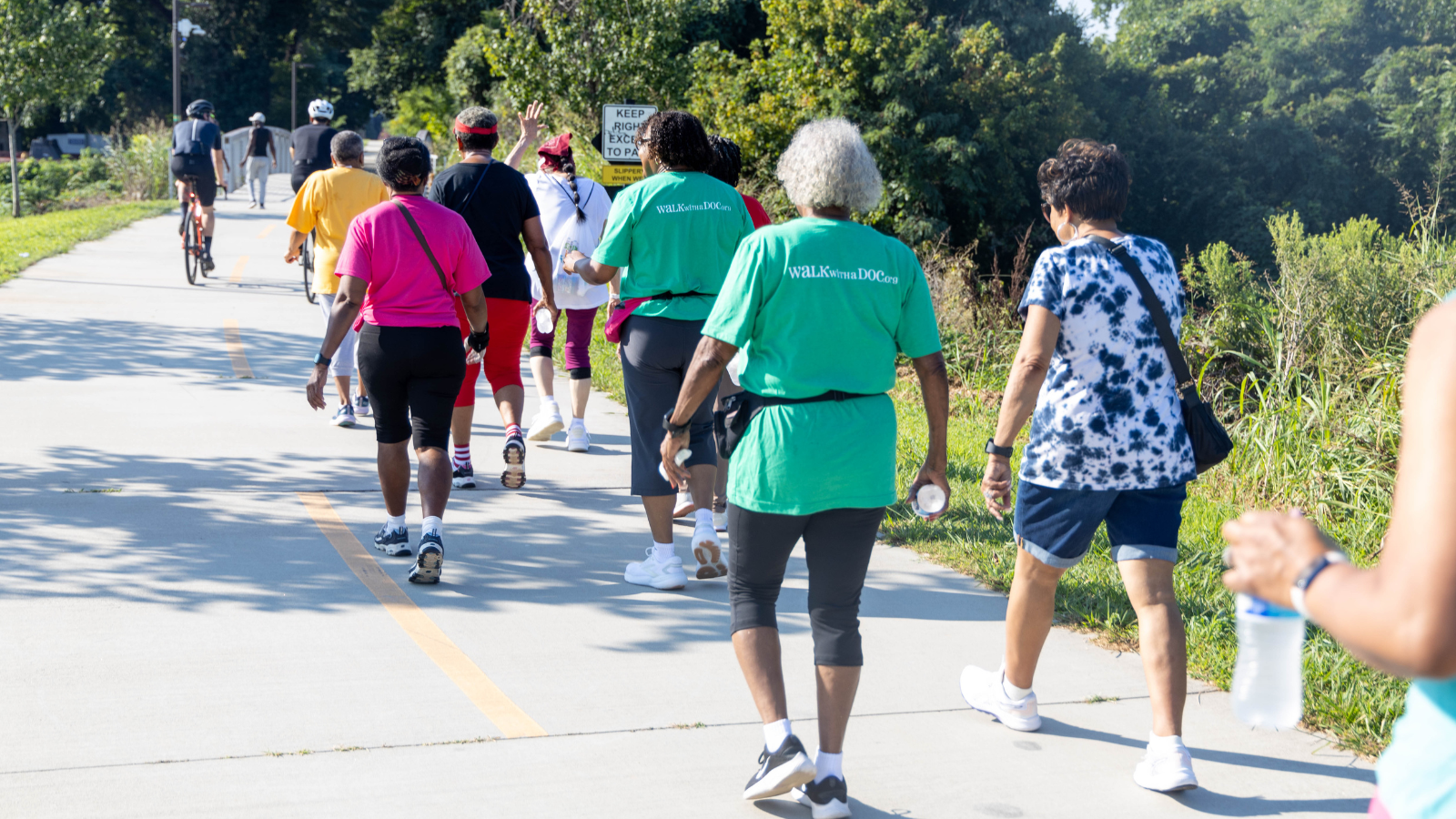
Now compare that to a Walk with a Doc event.
No exam room.
No gowns.
No waiting room TV.
No billing code.
Just people.
Walking.
Talking.
Breathing fresh air.
Asking questions they might never ask in an office:
“Doc, how much should I really be walking?”
“What do you eat for breakfast?”
“How do you deal with stress?”
And maybe most importantly, laughing.
That’s slow medicine.
It’s medicine that says:
Let’s take our time.
Let’s build trust before treatment.
Let’s create a connection before correction.
Let’s remember that health isn’t only something delivered in a clinic. It’s something built in a community.
I’m a cardiologist, and I believe deeply in modern medicine.
I love procedures.
I love science.
I love evidence.
But some of the most healing moments I’ve witnessed didn’t happen in a hospital.
They happened on sidewalks.
On trails.
In parks.
A retired teacher telling me she walked farther this month than she has in five years.
A child racing ahead of his grandparents.
A participant saying, “I came for my blood pressure, but I stayed because I made friends.”
That’s medicine, too.
Maybe even the best kind.
And perhaps this is what our world needs more of.
We are drowning in speed.
Fast food.
Fast news.
Fast opinions.
Fast medicine.
We’re told to multitask, hustle, optimize, and “maximize efficiency.”
But healing rarely happens fast.
Trust doesn’t happen fast.
Behavior change doesn’t happen fast.
Relationships don’t happen fast.
The human heart (physically and emotionally) prefers a slower pace.
That’s why walking is such a powerful prescription.
It’s not dramatic.
It doesn’t trend on social media (well, not usually)
No one brags about a “Zone 2 conversational stroll.”
But maybe they should.
Because walking is beautifully inefficient (but highly effective).
You can’t rush a walk.
You notice things.
Birds.
Neighbors.
Your own thoughts.
You arrive nowhere… and somehow feel better.
That’s the essence of Walk with a Doc.
It permits us to slow down.
To move, yes, but not frantically.
To talk, but not in sound bites.
To heal, but not instantly.
It’s slow medicine.
And maybe that’s exactly why it works.
So this week, here’s my prescription:
Try one thing slowly.
Eat one meal slowly.
Take one walk without your phone.
Listen to someone without interrupting.
Or better yet, join a Walk with a Doc.
We’ll be the group moving at two, three, or four miles per hour (you pick)
while quietly changing the future of healthcare.
One slow step at a time.
David
David Sabgir, MD, FACC
Cardiologist and Founder/CEO of Walk with a Doc
About Walk with a Doc:
As an international non-profit organization, Walk with a Doc is committed to inspiring communities through movement and conversation with walking groups led by local doctors, healthcare providers, or medical students.
Started in 2005 by Dr. David Sabgir, a cardiologist in Columbus, Ohio, the program now extends to hundreds of communities throughout the world. The walks are a fun, free, and safe place to get physical activity, learn tips for healthy living, and meet new people.
Learn more at www.walkwithadoc.org